
Home / Insights / Break-Fix vs Managed IT
Managed IT
Break-Fix vs Managed IT: What Actually Costs More?
A transparent look at total cost of ownership over 12 months.

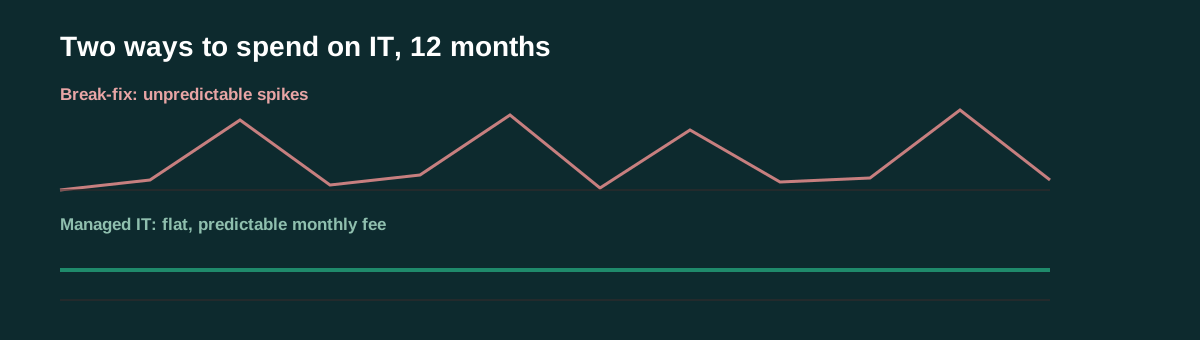
Break-fix IT support looks cheaper on paper, you only pay when something breaks. Managed IT looks more expensive, a fixed monthly fee whether anything breaks or not. Over a full year, the comparison usually flips.
Why break-fix costs creep
Break-fix pricing creates a structural misalignment: the provider only earns money when something is broken, so there is no financial incentive to prevent problems, and every incident is billed by the hour. A single serious incident, a ransomware event, a failed server, a botched update, can cost more in emergency hourly fees than a full year of a managed contract.
There is also a hidden cost that rarely appears in the invoice: staff downtime. Every hour your team can’t work while IT is being fixed is a real cost, even if it never shows up on an IT bill.
Why managed IT is usually cheaper over 12 months
A managed IT model is priced on prevention: monitoring, patching, and maintenance happen continuously, specifically to stop incidents before they happen. The provider’s incentive is aligned with yours, fewer incidents means less of their own time spent on emergency work, for the same fixed fee. Costs also become predictable, which matters as much for budgeting as for the raw total.
When break-fix genuinely makes sense
For a very small operation with minimal IT dependency and an internal person who can handle day-to-day issues, occasional break-fix support for specific projects can still be the right call. The tipping point is usually somewhere around the point where an outage would meaningfully disrupt the business, at that point, prevention becomes worth paying for.