
Home / Insights / Consumer Router vs FortiGate
Network Security
Consumer Router vs FortiGate: What Changes?
What enterprise-grade firewall protection actually buys an SME.

A lot of small businesses run their network on the same class of router you would buy for a home. It works, technically, but works and secure are not the same thing, and the gap matters more as a business grows.
What a consumer router actually does
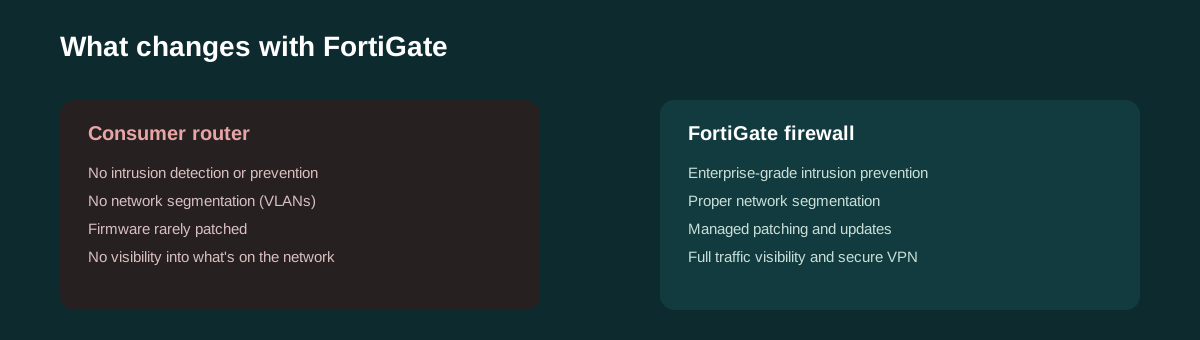
Consumer and prosumer routers are built for simplicity: basic NAT firewalling, maybe a simple content filter, and not much else. They generally have no real intrusion detection, no meaningful traffic inspection, and firmware that is rarely updated once installed. They also treat your whole network as one flat space, a compromised laptop in reception has the same network access as your finance server.
What changes with a business-grade firewall like FortiGate
- Network segmentation — production systems, office staff, and guest Wi-Fi live on separate segments, so a compromise in one doesn’t automatically expose the others
- Intrusion Detection & Prevention (IDS/IPS) — active inspection of traffic for known attack patterns, not just basic filtering
- Real threat intelligence — continuously updated threat feeds, rather than static rules set once at install
- Secure VPN done properly — remote access that supports modern authentication (like SAML SSO), rather than a basic shared-password VPN
- Visibility — actual logging and reporting on what’s being blocked and allowed, so problems are visible instead of invisible
Is it worth the extra cost?
The upfront cost is genuinely higher. For a business with any compliance requirement (GDPR, NIS2), remote staff, or data worth protecting, the honest comparison isn’t cheap router vs. expensive firewall, it’s the cost of a proper firewall vs. the cost of the incident a consumer router won’t stop.